Author
The author of the Fractal drawing method is a Russian pedagogue, clinical psychologist specialized in family psychotherapy and rehabilitation.
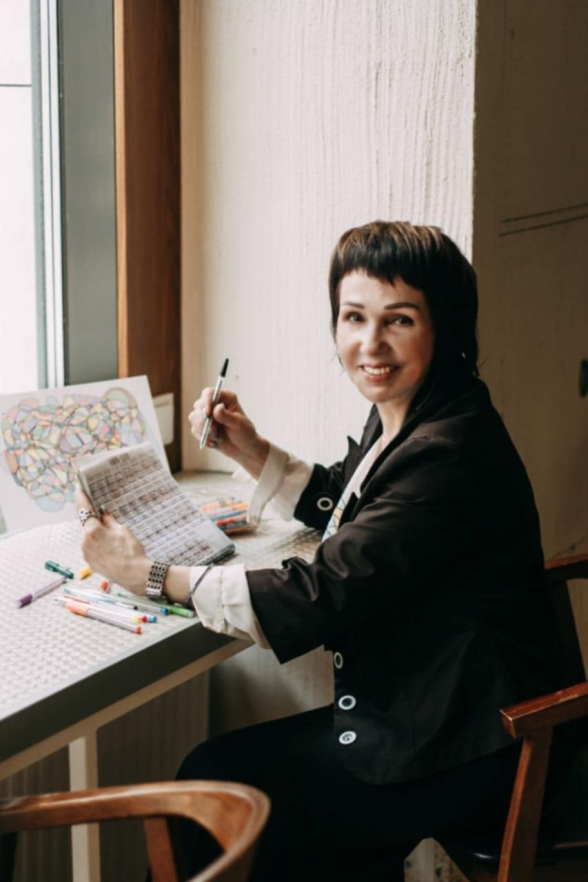
Tanzilia Poluyakhtova is the author of several therapeutic methods, or healing programs:
• Fractal drawing method, that diagnose and correct with line, color and fine neurological stimulus
• Biocrystal Spas method, that deals with the influence of shapes on the physical and emotional state of a person
• Voice correction methods (correction of physical and emotional state using the relationship body-voice-body movement-fine motor skills)
• Author of many scientific articles and the book " The source of fractal wisdom"
Basic info of the Method
The Fractal drawing method,
as a diagnostic tool, completely eliminates the possibility of a conscious response and on the other hand, provides a wide range of techniques useful for self-correction.
One of the most impressive results of the method is its incredible simplicity, but at the same time its depth in developing the creative potential of people who have become acquainted with various directions and techniques of the method over the past 30 years.
The working principle in the Method and its techniques are used in a wide range of tasks related to human emotional activity.
The method is also used in the areas of management, solving personnel issues, team building and diagnosing the emotional climate in the team.
Research
There is a collection of texts and research projects created and carried out by Method practitioners over the years.

EBS and various content on the topics in elective techniques within the method, have been developed and studied in the last more than thirty years by practitioners all around the world. Look at them and find your inspiration.
FRACTALDRAWING METHOD
A way of self-expression, self-realization, correction, revealing creative potential


Modern artistic fractal drawing
Goal setting - Goal result
Color reflex therapy
Fractal numerology
Therapeutic course "12" + 1
Fractal structuring of life tasks
Fractal world - Family program
Diagnostic drawing
To perform a test drawing, you need, first of all, a more or less quiet environment and some free time. Required tools:
• set of wooden crayons, ballpoint pens, in as many shades as possible
• A4 white drawing paper
• black ballpoint pen
and container where you will place crayons.
How to draw?
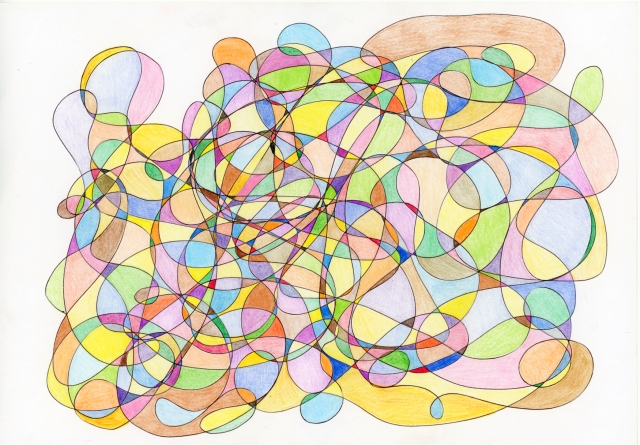
Place the paper horizontally in front of you. With your eyes closed, draw a continuous line, trying to fill two-thirds of the paper surface in 60 seconds. The line should be clear and well drawn.
Do not lift the pen! The speed of the pen movement is medium, without sudden strokes. Draw calmly, with a large number of intersections horizontally, vertically and diagonally, performing circular, oval or any other movements, trying to achieve a variety of directions and lines, also without frequent repetitions. Be sure to leave the white background of the paper as clean as possible, without lines, stains and inscriptions. Attention! While coloring the test drawing, choose crayons exclusively with your eyes closed.
A few necessary tips:
The beginning and end of the line must be "closed", rounded to the closest point of intersection. We emphasize once again that we do not draw the line abruptly, but at a medium speed - not too fast, not too slow. The hand should move freely, as if by itself. Do not try to draw familiar shapes (flowers, houses, trees, etc.)
When coloring, you should take care that adjacent fields separated by a line should not be filled with the same color. If the fields touch at one point and are located diagonally, then they may be filled with the same color. The fields must be colored without sudden movements, neatly and evenly. You can color at least three fields with the same color, but no more than 10. In case the same color constantly falls into your hand, color at least three fields, and then return the crayon to the container pile
Our mission
Implementation and dissemination of the fractal drawing method through professional application as well as a personal tool for development and relaxation
Inclusion of a wider community of professionals in various fields: medicine, psychology, sociology, education for working with children and adults, etc. as a developmental force for deeper study and development of the method
Easy accessibility and introduction of the method and its techniques into everyday practice and activities of the mental health prevention process
What we offer
Depending on the goal of the interested party, an appropriate sequence of steps is designed:
#personal development work
#improvement or design of a program for a specific goal
#responding to a project and professional request in the company or work environment.
Tell us your requirements and we will be more than happy to prepare a special program for you!
Have you signed up for our exclusive offers?
